
Getting Started
Master your Stream Machine water launcher with our official usage guide. Learn the proper dip-and-pull filling method, techniques to shoot up to 70 feet, and the best water sources for maximum performance and fun.
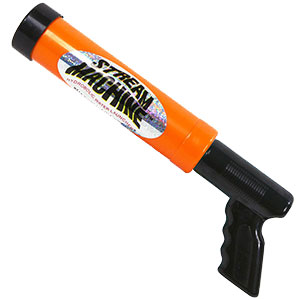
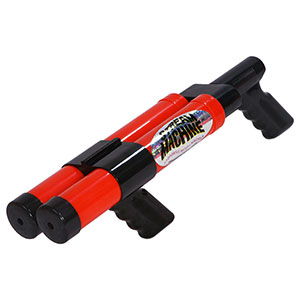
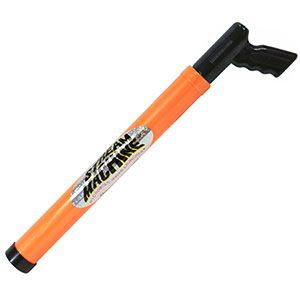
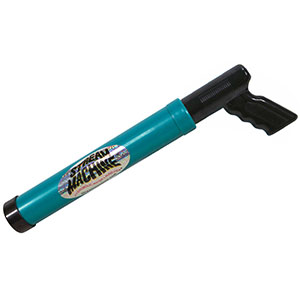
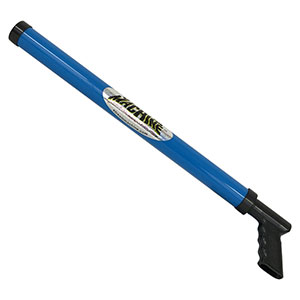
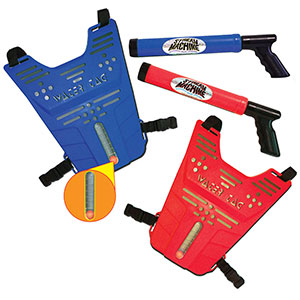
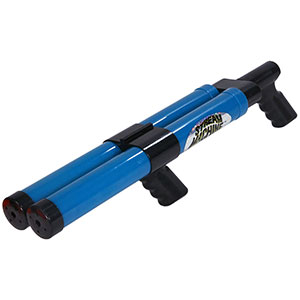
When you pull the handle back, it creates a vacuum that draws water into the barrel. When you push the handle forward, the piston forces that water out of the front nozzle in a concentrated, high-pressure stream. This allows the launcher to fire a solid column of water up to 70 feet, far outperforming traditional reservoir-based water guns that require pre-pressurizing air.
Operation is broken down into three simple steps:
For maximum range and performance, the barrel must be filled correctly to avoid drawing in air. If the nozzle is not fully submerged during the "pull" phase, air pockets will form inside the tube, which reduces internal pressure and causes the stream to spray or break apart prematurely. Additionally, the speed and smoothness of your "push" directly impact the distance; a steady, forceful motion creates the most stable and long-reaching stream.
Because the Stream Machine draws water directly into the main barrel, it is susceptible to clogs if used in dirty or sandy water. To maintain peak performance, it is vital to keep the intake nozzle clear of grass, sand, and small pebbles. Many models feature a removable tip to make flushing out debris easier. Regularly rinsing the unit with fresh water after use in chlorine or salt water will also ensure that the internal piston and seals continue to slide smoothly without sticking.
Filling a Stream Machine Water Launcher is fundamentally different from traditional water guns that use a reservoir. Instead, it utilizes a "dip-and-pull" piston system to draw water directly into the main barrel. To start, ensure the handle is pushed all the way forward so the tube is empty. Submerge the front nozzle completely in a clean water source such as a pool, bucket, or lake and pull the handle back slowly and steadily. This creates a vacuum that fills the barrel with a solid column of water, ready for high-velocity launching.
The most critical part of the filling process is keeping the nozzle fully submerged. If the nozzle breaks the surface of the water while you are pulling the handle, the launcher will suck in air pockets. Trapped air significantly reduces internal pressure, leading to a weak, misty spray rather than a powerful, long-range stream. If you notice bubbles in the tube or a decrease in performance, simply empty the launcher and refill it more slowly, making sure the intake stays deep underwater.
For the most efficient refills, use deep, calm water sources where you can keep the launcher pointed downward. Swimming pools and large buckets are ideal because they provide consistent depth. While lakes and shoreline areas work well, be careful not to submerge the nozzle in sand or silt, as debris can clog the piston and damage the internal seals. Using a steady, smooth motion rather than a quick pull will ensure the barrel is filled to its maximum capacity.
If your Stream Machine isn't drawing water properly, first check that the handle was fully extended before you began the fill. Another common mistake is pulling the handle too fast, which can create turbulence and air bubbles. To "prime" the unit and remove any stubborn air, dip the nozzle back into the water and cycle the handle a few times while submerged. This flushes the system and ensures that the internal piston has a tight seal, restoring the launcher’s signature 70-foot range.
Achieving the legendary 70-foot range of a Stream Machine requires more than just strength; it demands a refined shooting technique. The most critical factor is the "smooth forward push." Many users make the mistake of jerking the handle quickly, which causes turbulence and breaks the water stream into a misty spray. Instead, use one continuous, steady motion to maintain internal pressure. This controlled acceleration allows the piston to drive a solid column of water forward, resulting in a tighter, further-reaching stream.
To maximize distance, you must account for physics by aiming slightly upward. Holding the launcher perfectly level often results in the stream falling short due to gravity. By raising the nozzle slightly above your target—effectively creating an arc—you allow the water to travel its full trajectory. Your stance also matters: stand with your feet shoulder-width apart and use your upper body and core for leverage rather than just your arms. This stable base provides the consistent power needed for maximum distance shots.
You cannot shoot 70 feet with a half-empty launcher or one filled with air. Before every long-range attempt, ensure you have used the proper "dip-and-pull" method to achieve a full, air-free barrel. Any air pockets trapped inside the tube will compress when you push the handle, absorbing the energy that should be going into the water stream. If you feel "sponginess" or resistance that doesn't result in a strong stream, you likely have air in the tube and should perform a slow, submerged refill to purge the system.
Accuracy is improved by keeping your arms aligned directly behind the launcher's barrel. Avoid twisting your wrists or pushing at an angle, as this can cause the nozzle to kick and ruin your aim. Practicing your "follow-through"—continuing the push until the handle is fully seated—ensures that the final burst of water maintains the same velocity as the rest of the stream. By combining a smooth, powerful push with a slight upward angle and a perfect fill, you can consistently hit targets at the maximum rated distance.
Stream Machine water launchers hold water inside the main tube (not a separate reservoir). The amount of water they hold depends on the model size and tube length. Longer models generally hold more water per fill, while smaller models hold less but can be refilled quickly. Regardless of model, performance is best when the tube is completely filled and free of air pockets.
Because Stream Machine launchers fill the tube directly, capacity varies by model. Instead of focusing on an exact measurement, the most useful way to think about capacity is how many strong shots you can get per fill and how quickly you can reload.
Stream Machine launchers refill through the front nozzle using the dip-and-pull method, so the best water source is one where you can easily submerge the nozzle and draw in clean water without bubbles or debris.
Pools are often the easiest and most convenient place to refill because you can fully submerge the nozzle and refill quickly during play.
Natural water sources work well, but you may need to be more careful about debris like sand, algae, and small particles.
Using a bucket or tub is a great option for backyard play when you do not have a pool or lake nearby.
Stream Machine launchers are designed to fill by dipping the nozzle into water and pulling the handle. You can use a bucket or tub filled by a hose for easier refills, but direct hose filling is not the intended method and may introduce more air into the tube.
You only need enough depth to fully submerge the nozzle. Deeper water can make refilling easier, but a deep bucket or tub works well for backyard use.
For best results, focus on a complete fill, clean water sources, and keeping the nozzle submerged to prevent air pockets. These small details make a noticeable difference in stream strength and consistency.
Master your Stream Machine water launcher with our official usage guide. Learn the proper dip-and-pull filling method, techniques to shoot up to 70 feet, and the best water sources for maximum performance and fun.
Learn how Stream Machine water launchers work: dip the barrel to load, pull the handle to fill, and push to fire a powerful water stream. Includes tips for best range and fast reloads.
Step-by-step guide showing how to fill a Stream Machine water launcher using the dip-and-pull method. Learn how to avoid air pockets and get stronger water streams.
Learn the proper technique to shoot a Stream Machine water launcher up to 70 feet. Improve distance, pressure, and accuracy with simple step-by-step tips.
Find out how much water a Stream Machine water launcher holds and which water sources work best for refilling - pool, lake, bucket, tub, and more. Tips for stronger streams and cleaner refills.
Having trouble with your water launcher? Learn how to fix weak water pressure, stuck handles, or air in the tube. Our Stream Machine troubleshooting guide covers leaks, sand removal, and performance fixes to get you back in the game.
Fix a Stream Machine that is not shooting far. Learn the most common causes of weak streams - air in tube, poor fill, debris, seals - and simple step-by-step solutions.
Fix a Stream Machine handle that feels loose, sticks, or will not slide smoothly. Learn common causes like air, debris, swelling, and wear plus safe step-by-step solutions.
Learn why a Stream Machine may leak from the front nozzle and how to fix it. Common causes include air, partial fills, debris, worn seals, and pressure technique.
Fix air in the tube and remove sand or debris inside your Stream Machine. Learn how to prime properly, flush grit safely, and restore strong distance and pressure.
Learn how to clean and maintain your Stream Machine water launcher. Get expert tips on salt water rinsing, mold prevention, and off-season storage to ensure your launcher lasts for years.
Learn how to rinse and clean your Stream Machine after pool chlorine or salt water use. Simple flush steps help prevent buildup, sticking handles, and weak streams.
Keep your Stream Machine clean and odor-free. Learn how to drain, rinse, dry, and store your water launcher to prevent mold or mildew after pool, lake, or bucket use.
Protect your Stream Machine from sun and heat damage and store it correctly in the off-season. Learn drying, rinsing, indoor storage, and freezing prevention tips.
Contact options may differ depending on the type of help you need.